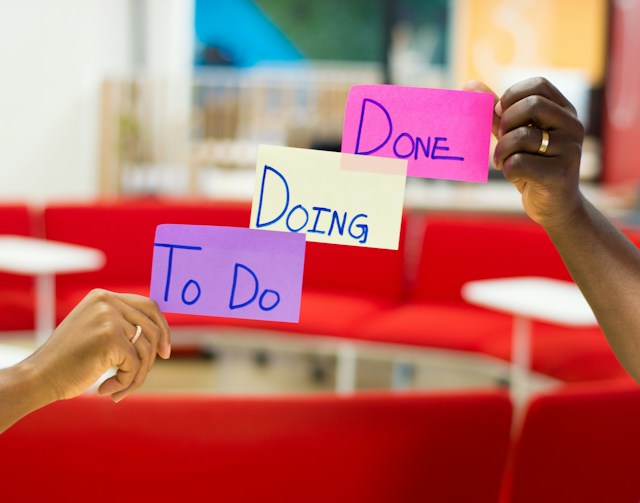
The management method you pick shapes your pace of work, how your team communicates, your budget, and your ability to respond when things change.
The trap is that there’s no single model that works for every organization.
Agile, Waterfall, and hybrid models organize work in different ways, but any of them can produce good results. What matters is matching the method to the project’s goal, how stable the requirements are, the level of risk involved, and what stakeholders expect.
Waterfall — When the Plan and Predictability Come First
Waterfall, also known as the cascade approach, runs a project through clearly defined stages. The team moves in sequence through analysis, design, build, testing, and deployment. Before the next stage begins, the previous one should be finished and signed off.
This approach works when the scope is well documented from the start and changes are rare or expensive. Waterfall shows up in construction, manufacturing, and infrastructure projects, as well as in rollouts that require formal documentation and regulatory compliance.
The main advantages of the cascade model are:
- a clear schedule and division of responsibility
- easier budget planning
- thorough documentation
- the ability to control each successive stage
- greater predictability for the client and the project sponsor
Waterfall’s limitation is its lack of flexibility. If the client changes their expectations after the analysis phase wraps up, making those changes may require extra budget, a contract amendment, or a pushed-back deadline. That’s why this model isn’t the best fit for projects where user needs are still taking shape.
Agile — Working in Short Cycles
Agile is an adaptive approach in which the project is delivered in stages, through short work cycles. Instead of waiting months for a finished product, the team delivers pieces of the solution, gathers feedback, and plans the next round of work based on what it learns.
In practice, Agile often uses the Scrum framework. The team works in sprints — fixed periods that usually run from one to several weeks. At the start of a sprint, the team selects items from the backlog; at the end, it presents what it built and reviews how the work went. The official Scrum Guide describes the framework in terms of sprint planning, working from a product backlog, and inspecting results with stakeholders.
Agile works well where scope can evolve and fast feedback matters more than a detailed plan written months in advance. That covers software development, marketing campaigns, digital product work, and innovation projects, among others.
Before you choose Agile, make sure the project has the right conditions:
- the client or product owner can make decisions on a regular basis
- the team is able to organize its own work
- priorities can be updated mid-project
- some features can be released in stages
- communication between team members is frequent and specific
Agile requires discipline, clear priorities, and constant contact with decision-makers.
The Hybrid Approach — Structure and Flexibility
The hybrid model combines elements of Waterfall and Agile. The team sets the project’s key parameters up front: the goal, the budget, critical deadlines, legal requirements, and major milestones.
At the same time, part of the work runs in short iterations so solutions can be tested faster and feedback acted on sooner.
This is a good option when a project has both fixed elements and areas that call for experimentation. Launching a new e-commerce platform is a good example. Payment system integrations, terms of service, and security requirements need a detailed plan. Page layout, user account features, and checkout flows, on the other hand, can be developed and tested in stages.
With a hybrid approach, it’s worth defining from day one which elements are fixed and which are open to iteration. Without that, the team can struggle to make decisions, and the client won’t know when a change requires formal approval.
The Key Differences
The comparison below shows how the three approaches differ in planning, scope, communication, and documentation. Laying it out this way makes it easier to judge which method best suits the nature of your project, your team’s availability, and your client’s expectations at every stage, without overcomplicating the decision.
| Area | Waterfall | Agile | Hybrid Approach |
| Project scope | Fixed at the outset | Can change along the way | Partly fixed, partly flexible |
| Planning | Detailed, done before work starts | Planned in stages | A master plan plus short-term plans |
| Client contact | Usually at key milestones | Regular and frequent | Regular, depending on the area of the project |
| Documentation | Extensive | Only what’s necessary | Required for key elements |
| Best suited to | Predictable, regulated projects | Digital products and innovation | Complex projects with a mix of both |
How Do You Choose a Method for Your Project?
Before work begins, answer a few questions. Are the requirements already known and approved? Can the client give feedback on a regular basis? How expensive will it be to make changes once work is underway? Does the project require full documentation and formal sign-offs? Does the team have experience working iteratively?
- If the scope is stable and the schedule has to be approved before the start, go with Waterfall.
- When the product will be built around user feedback and shifting priorities, Agile gives you more room to maneuver.
- If you need a formal plan but want to test some of the solutions as you go, a hybrid model may be the safest choice.
A good method is no substitute for communication, accountability, or sensible planning. It should help the team reach its goal, not saddle it with rigid rules. Pick the approach that fits the realities of the project, the skills of your team, and the needs of your client.